Brownfield AGV Projects: Why Existing Plants Need a Consultant First
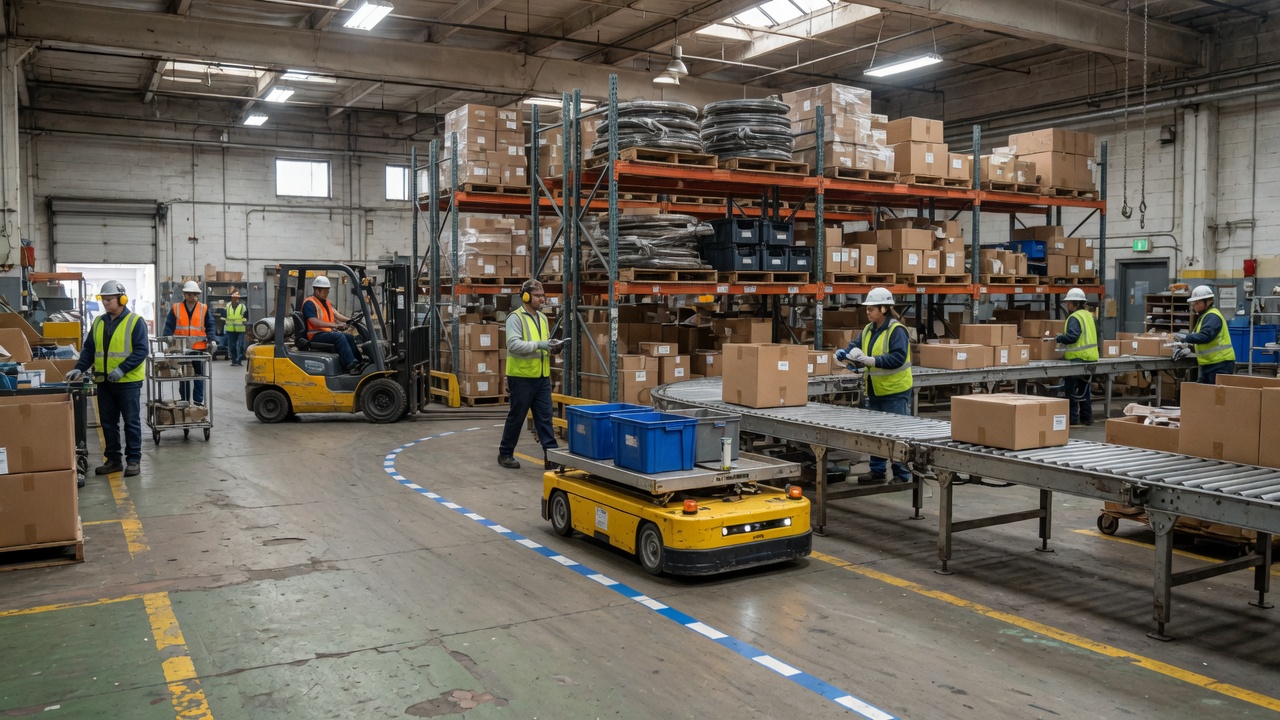
Most AGV projects in manufacturing are brownfield AGV projects. The building is already there. Production is already running. Racking, docks, drains, columns, and traffic patterns were not designed around automated guided vehicles. The system has to fit the plant — the plant will not be emptied for the system.
That is why existing plants need independent AGV consulting before a vendor designs the installation. A greenfield warehouse can still absorb a late layout change. A live plant absorbs it as downtime, temporary labor, and a design that was never fully compatible with the building. Brownfield AGV implementation is a constraint problem first and a vehicle problem second.
Why Brownfield AGV Implementation Breaks Greenfield Assumptions
Vendor concepts often assume clear aisles, predictable flow, and time to install infrastructure. A brownfield AGV site usually has none of those for long. Forklifts keep running. Pedestrians keep crossing. Maintenance still needs access. Weekend outages are limited. If the first design ignores that, commissioning becomes a negotiation with operations instead of a controlled start-up.
Independent consulting should document the constraints that will not move:
- Column spacing, dock locations, and process equipment that stay put
- Floor joints, slopes, pits, and surface condition
- Existing racking and whether it can support AGV interface heights
- Shared aisles with manned trucks and foot traffic
- Wireless coverage, power, and charging locations that fit the current layout
- Production windows that limit construction and cutover
Those items decide feasibility. They are not details to “work out with the integrator.” Floor and traffic issues are covered further in how warehouse floor conditions impact AGV performance and operating AGVs in mixed-traffic environments.
The Process Is Already in Place — and It May Be the Wrong Process
Brownfield automation has a second trap: automating the current method because it already exists. If operators currently stage pallets in the aisle, the AGV design will try to automate aisle staging. That can look faithful to the operation and still lock in congestion.
A consultant should be willing to change the process before sizing vehicles. That is harder in a live plant because people are used to the current flow. It is also where most of the ROI is. Automating a broken brownfield process is more expensive than automating a broken greenfield process, because you pay for both the system and the disruption. See why you shouldn’t automate broken processes and why process design should come before vehicle selection.
What Independent Consulting Changes in a Brownfield AGV Project
| If the vendor leads first | If the consultant leads first |
|---|---|
| The current layout is treated as given | The layout is tested against AGV path, charging, and recovery needs |
| Installation is planned around the product | Installation is planned around production windows and existing traffic |
| Infrastructure shows up as a change order | Floor, network, and charging work is in the first capital number |
| Cutover is optimistic | Phasing is part of feasibility, not an afterthought |
That is the same owner-versus-delivery split described in AGV consultant vs. system integrator. In a brownfield plant, the cost of reversing the sequence is higher because you cannot freeze the site while the design catches up.
Phasing Is Part of Feasibility
Existing plants rarely go live everywhere at once. A defensible brownfield plan usually starts with a limited set of moves, proves recovery and mixed-traffic rules, then expands. If the first proposal requires a full-facility cutover to work at all, treat that as a risk, not a virtue.
Independent AGV consulting should define:
- Which flows can be automated without stopping the plant
- What temporary traffic rules are required during construction
- Where charging and parking can sit without stealing production space
- How exceptions will be handled while operators and AGVs share the floor
- What “done” looks like for phase one before more vehicles are purchased
That is also where capital allocation gets honest. Phase-one success is a better approval basis than a full-fleet rendering of a building that cannot take the full fleet yet. Facility preparation is covered in how to prepare your facility for AGV implementation.
Chemical and Hazardous Brownfield Sites Compound the Problem
If the existing plant is a chemical or hazardous operation, brownfield constraints include classification, containment, and emergency access on top of live production. Those sites should not use a warehouse integrator’s first layout as the design of record. That case is covered in AGV consulting for chemical and hazardous manufacturing.
Related reading
Key Takeaways
- Most manufacturing AGV projects are brownfield: the plant keeps running
- Existing layout, floors, traffic, and production windows decide feasibility
- Automating the current method can lock in the current congestion
- Independent consulting should lead before a vendor designs around its product
- Phasing, cutover, and infrastructure belong in the first capital case
Frequently Asked Questions
Can we skip consulting if the vendor has done brownfield sites before?
Experience helps. It does not replace an owner-side review of your building, your process, and your production calendar. The vendor’s prior site is not your site.
Do brownfield AGV projects take longer?
They take longer when constraints are discovered late. A few weeks of independent feasibility usually shortens installation because the scope matches the plant that actually exists.
Should we shut down production to install AGVs?
Rarely for the whole plant. A consultant should identify what can be installed in planned outages and what requires a phased cutover. A design that only works with a long shutdown is often the wrong design.
Is a brownfield study more expensive?
It can take more site time than a clean-sheet warehouse. It is still a fraction of the cost of installing a system that cannot run in the live building. See what AGV consulting costs.
Review our feasibility study scope to see how independent AGV consulting is structured for live manufacturing facilities.
Ready to protect your next automation investment?
Book Your Feasibility Study Today →