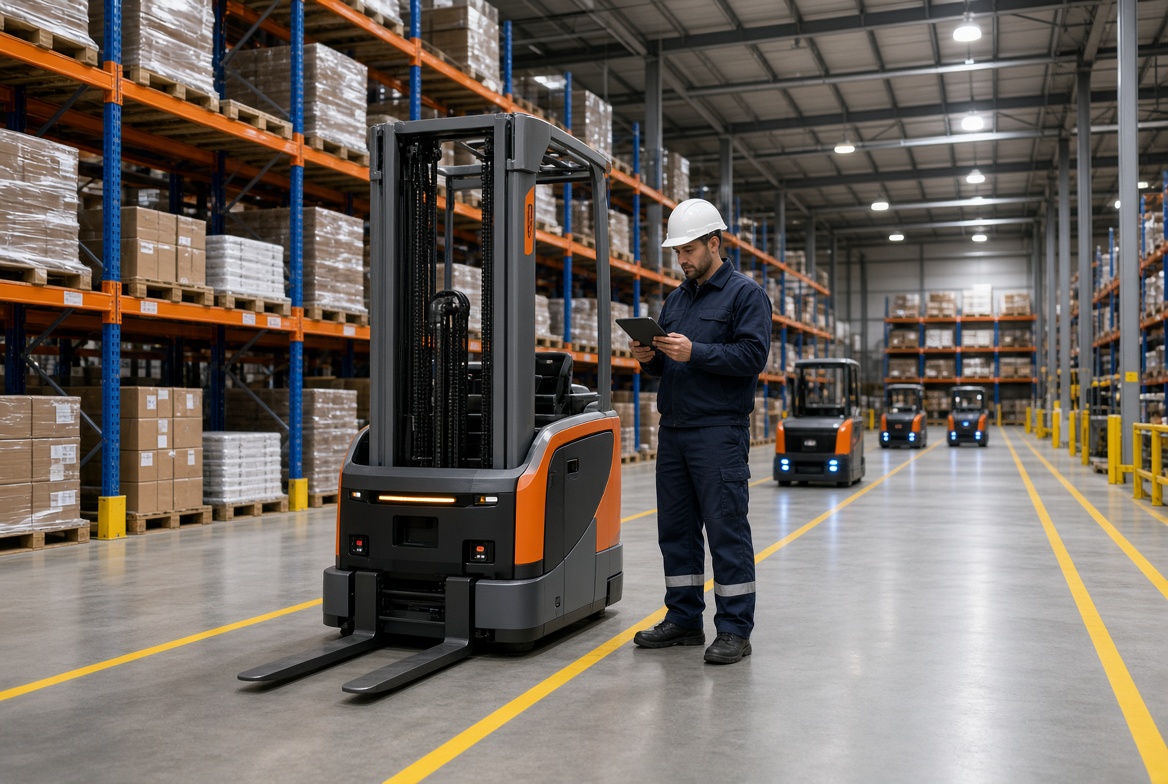
Managing AGV Exceptions: How to Reduce Manual Interventions and Protect Throughput
One of the quietest killers of AGV performance is the exception. An AGV stops because of a blocked path, a missing load, a communication drop, or an unexpected obstacle. A person has to walk over, investigate, clear the issue, and restart the vehicle. Each of these manual interventions feels small in the moment, but they add up quickly and steadily erode AGV throughput.
When AGV exceptions become frequent, the system that was supposed to reduce labor starts consuming it instead. Utilization drops, throughput falls short of plan, and the original ROI assumptions quietly erode. Effective exception handling is one of the most important operational disciplines for any AGV fleet that wants to protect long-term performance.
Why AGV Exceptions Matter More Than Most Companies Realize
Every manual intervention carries a cost that goes well beyond the minutes spent resolving it:
- The vehicle is offline and not contributing to AGV throughput
- Other vehicles may be delayed or forced to re-route
- Supervisors and operators are pulled away from higher-value work
- Repeated interruptions reduce confidence in the system
- Overall AGV utilization declines, often without anyone noticing the cumulative impact
In facilities with high exception rates, it is common to see AGV utilization 15–30% below design targets. The gap is rarely caused by a single dramatic failure. It is usually the result of dozens of small, recurring interruptions that never get systematically addressed. Over time, these AGV exceptions become one of the main reasons projected labor savings and throughput gains fail to materialize.
Common Causes of AGV Exceptions
1. Path and traffic conflicts
Blocked aisles, manned forklifts stopping in AGV lanes, temporary staging, and congestion at intersections are among the most frequent causes of AGV exceptions. In mixed traffic environments, these conflicts are especially common and often generate the highest volume of manual interventions.
2. Load and location issues
Missing pallets, loads placed outside expected zones, damaged or shifted loads, and incorrect location data in the WMS all trigger exceptions that require human resolution. These issues are particularly damaging because they often appear random until the underlying data or process problem is identified.
3. Environmental and infrastructure problems
Poor floor conditions, debris, temporary obstacles, weak Wi-Fi coverage, and lighting changes can all cause navigation or communication failures. These environmental factors are frequently underestimated during design and continue to generate AGV downtime long after go-live.
4. Process and data gaps
Incomplete or outdated process rules, inconsistent work practices, and poor master data quality create situations the AGV system was never designed to handle automatically. When exception handling relies on operators inventing workarounds, the system never stabilizes.
High Exception Rate vs Low Exception Rate Operations
| High Exception Rate | Low Exception Rate |
|---|---|
| Frequent vehicle stops requiring operator attention | Most stops are rare and quickly resolved |
| Utilization well below design targets | Utilization stays close to planned levels |
| Supervisors constantly firefighting | Supervisors focus on improvement, not recovery |
| Operators lose confidence in the system | System is trusted and runs largely unattended |
| ROI assumptions quietly erode | Throughput and payback remain on track |
Practical Strategies to Reduce Manual Interventions
1. Measure exceptions systematically
You cannot improve what you do not measure. Track exception type, frequency, location, time of day, and resolution time. The goal is to identify the top recurring causes of AGV exceptions rather than treating every stop as a one-off event. Facilities that implement basic exception tracking almost always discover that a small number of issues drive the majority of manual interventions.
2. Attack the highest-frequency causes first
Most facilities discover that a limited set of root causes generate the bulk of AGV downtime. Fixing floor debris in one aisle, correcting a recurring location error, or adjusting a traffic rule often delivers more improvement than broad system tweaks. Prioritizing high-frequency problems produces the fastest gains in AGV throughput and utilization.
3. Improve process discipline around the AGVs
Many exceptions are created by human behavior — staging loads in the wrong place, leaving temporary obstacles, or ignoring AGV lanes. Clear rules, consistent training, and visible accountability are essential. Without process discipline, even a well-designed AGV system will generate constant manual interventions.
4. Strengthen the physical and digital environment
Address floor conditions, lighting, Wi-Fi coverage, and data quality. These foundational issues are frequently overlooked after go-live but continue to generate AGV exceptions for months or years. Improving the environment often reduces exception rates more effectively than software adjustments alone.
5. Design recovery procedures that are fast and consistent
When an exception does occur, the response should be standardized. Operators should know exactly how to diagnose common issues and return the vehicle to service with minimal delay. Fast, consistent exception handling limits the impact on overall AGV throughput.
The Role of a Feasibility Study in Reducing Future Exceptions
Many of the conditions that later create high exception rates can be identified before the system is purchased. A thorough feasibility study examines process variability, data readiness, traffic patterns, floor conditions, and Wi-Fi coverage. Addressing these issues early is far less expensive than trying to fix them after the fleet is already running and AGV exceptions are already affecting daily performance.
Review our feasibility study scope to see how these operational risk factors are evaluated.
Related Reading:
Key Takeaways
- Frequent AGV exceptions and manual interventions quietly destroy utilization and throughput
- Most exceptions come from a small number of recurring root causes
- Systematic measurement is the starting point for effective exception handling
- Process discipline, environment, and data quality are as important as the vehicles themselves
- Many exception risks can be identified and reduced during the feasibility phase
Frequently Asked Questions
What is considered a high exception rate for an AGV system?
There is no universal benchmark, but if operators are regularly intervening multiple times per hour across the fleet, AGV utilization and throughput are almost certainly being impacted. The goal should be to make manual interventions rare rather than routine.
Should we expect zero exceptions after go-live?
No. Some AGV exceptions are inevitable. The difference between a strong and weak operation is how frequent they are and how quickly they are resolved through disciplined exception handling.
Who should own exception reduction?
It should be a shared responsibility between operations, maintenance, and the automation team. Leaving it solely to the vendor or to individual operators usually produces limited improvement in AGV throughput.
When is the best time to address exception risks?
The best time is during the feasibility and design phase, before the system is installed. After go-live, the focus shifts to measurement, root-cause analysis, and continuous improvement of exception handling processes.
AGV systems deliver their full value only when they can run with minimal human intervention. Facilities that treat exception management as a core operational discipline protect their AGV throughput, their labor savings, and their return on investment. Those that ignore recurring AGV exceptions often find that the system never quite performs the way the original business case promised.
Ready for an independent evaluation of your automation or AI options?
Book Your Feasibility Study Today →