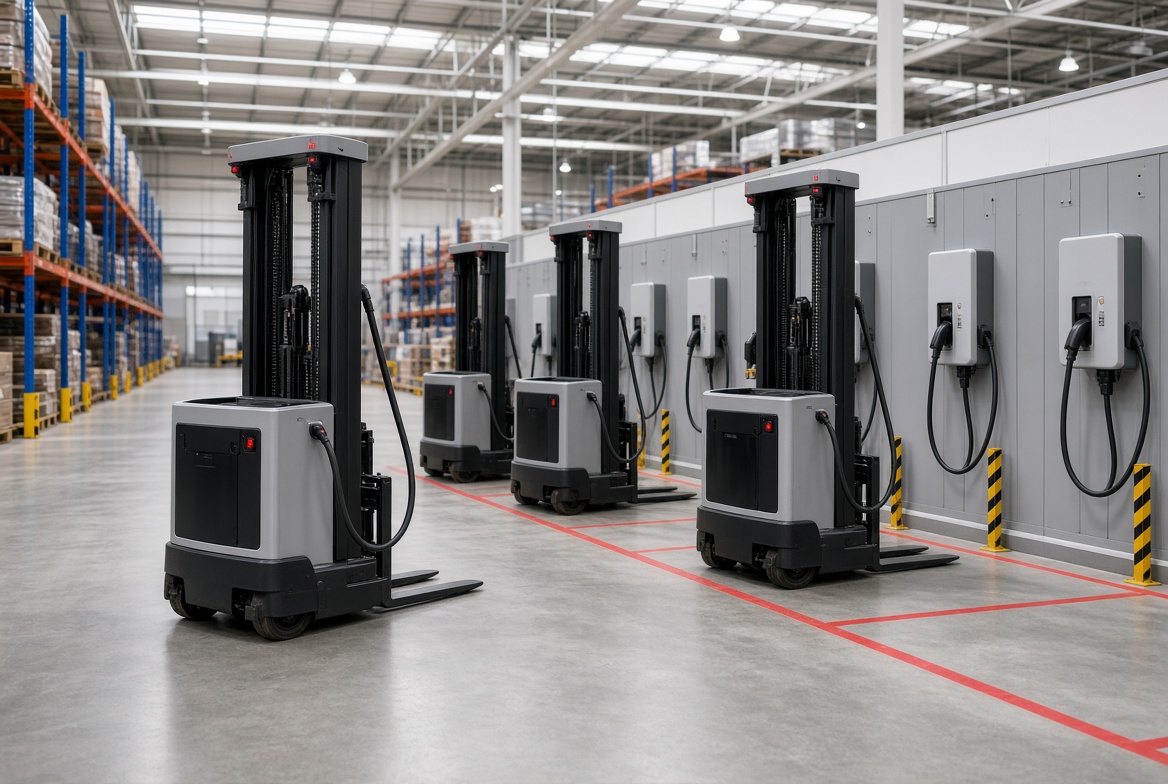
How to Design AGV Charging Infrastructure for Maximum Fleet Uptime
AGV charging infrastructure is one of the most frequently underestimated parts of an automation project. Companies focus heavily on vehicle count, navigation, and software, then discover after go-live that poorly designed charging is limiting fleet utilization and creating unnecessary downtime.
When charging is not planned carefully, vehicles spend more time waiting for available chargers, travel longer distances to charge, or experience bottlenecks during shift changes. These issues quietly reduce AGV throughput and erode the return on investment the system was intended to deliver.
Why Charging Design Has a Direct Impact on Uptime
Charging is not just a support function — it is a core constraint on how much productive work the fleet can deliver. Poor AGV charging design creates several common problems:
- Vehicles queue for limited charging stations during peak periods
- Long travel distances between work areas and chargers reduce productive time
- Insufficient charger capacity forces vehicles offline longer than necessary
- Poor layout creates congestion near charging zones
- Battery management becomes reactive instead of planned
In facilities with weak charging infrastructure, it is common to see AGV utilization fall 10–25% below design targets, even when the vehicles themselves are performing well.
Key Principles of Effective AGV Charging Design
1. Match charger quantity to real fleet demand
The number of charging stations should be based on actual operating patterns, not just the total number of vehicles. Factors such as shift structure, opportunity charging vs. full-shift charging, battery capacity, and peak demand all influence how many chargers are required. Undersizing the charging system is one of the most common and expensive mistakes.
2. Locate chargers to minimize non-productive travel
Charging stations should be positioned near high-activity areas whenever practical. Long travel times to and from chargers reduce the time vehicles spend moving product. In larger facilities, distributed charging points often outperform a single centralized charging farm.
3. Design for traffic flow and safety
Charging areas can become congestion points if they are poorly laid out. Clear entry and exit paths, adequate space for queuing, and separation from pedestrian or manned equipment traffic improve both safety and efficiency.
4. Support the intended charging strategy
Different operations use different approaches — opportunity charging during short breaks, scheduled full charges between shifts, or a hybrid model. The physical infrastructure must support the chosen strategy. A layout designed for opportunity charging looks very different from one designed for end-of-shift bulk charging.
5. Plan for future fleet growth
Charging infrastructure is expensive and disruptive to expand after the system is live. Designing with future vehicle additions in mind (extra stations, expandable electrical capacity, and flexible layout) protects long-term uptime and avoids costly retrofits.
Common Charging Design Mistakes
| Mistake | Impact on Fleet Uptime |
|---|---|
| Too few chargers for peak demand | Vehicles wait, utilization drops |
| Chargers located far from work areas | Excessive travel time reduces productive hours |
| No space for queuing or staging | Congestion and blocked paths |
| Ignoring future fleet expansion | Expensive and disruptive upgrades later |
| Mismatch between layout and charging strategy | Inefficient battery management and lower uptime |
Opportunity Charging vs Scheduled Charging
Two primary approaches dominate AGV charging design:
- Opportunity charging — Vehicles charge during short idle periods throughout the shift. This approach requires more chargers distributed across the facility but keeps more vehicles available during production hours.
- Scheduled / end-of-shift charging — Vehicles are taken offline for longer charging periods between shifts. This requires fewer chargers but reduces the number of vehicles available during certain windows.
Many modern operations use a hybrid model. The right choice depends on shift patterns, battery technology, and the required level of continuous availability. The charging infrastructure must be designed to support the selected strategy from day one.
How a Feasibility Study Improves Charging Design
Charging requirements should be evaluated during the feasibility phase, not after vehicles have been ordered. A thorough assessment examines expected utilization, shift structure, travel distances, battery performance characteristics, and future growth plans. This analysis allows the charging system to be sized and located correctly before major capital is committed.
Review our feasibility study scope to understand how charging and infrastructure factors are incorporated into the overall assessment.
Related Reading:
Key Takeaways
- Charging infrastructure has a direct and measurable impact on AGV fleet uptime and utilization
- Charger quantity, location, and layout must match real operating patterns
- Poor charging design is one of the most common causes of underperforming AGV systems
- Opportunity charging and scheduled charging require different infrastructure approaches
- Charging requirements should be defined during the feasibility phase, not after vehicle selection
Frequently Asked Questions
How many chargers does an AGV fleet typically need?
There is no universal ratio. The correct number depends on battery capacity, charging strategy, shift length, and utilization targets. A proper analysis during the design phase is the only reliable way to determine the right quantity.
Is centralized charging better than distributed charging?
It depends on the facility. Centralized charging can be simpler to manage, but distributed charging often reduces travel time and improves overall uptime in larger or multi-zone operations.
Should charging infrastructure be designed before selecting the AGV vendor?
Key requirements (approximate number of stations, preferred locations, and charging strategy) should be defined early. Final details are refined once the vehicle and battery technology are selected.
What is the biggest risk of under-designed charging?
Chronic under-utilization of the fleet. Vehicles spend more time waiting or traveling to charge than they should, which directly reduces throughput and extends the payback period.
Well-designed AGV charging infrastructure is invisible when it works and highly visible when it does not. Facilities that treat charging as a strategic design element rather than an afterthought consistently achieve higher utilization, more stable throughput, and stronger returns on their automation investment.
Ready for an independent evaluation of your automation or AI options?
Book Your Feasibility Study Today →