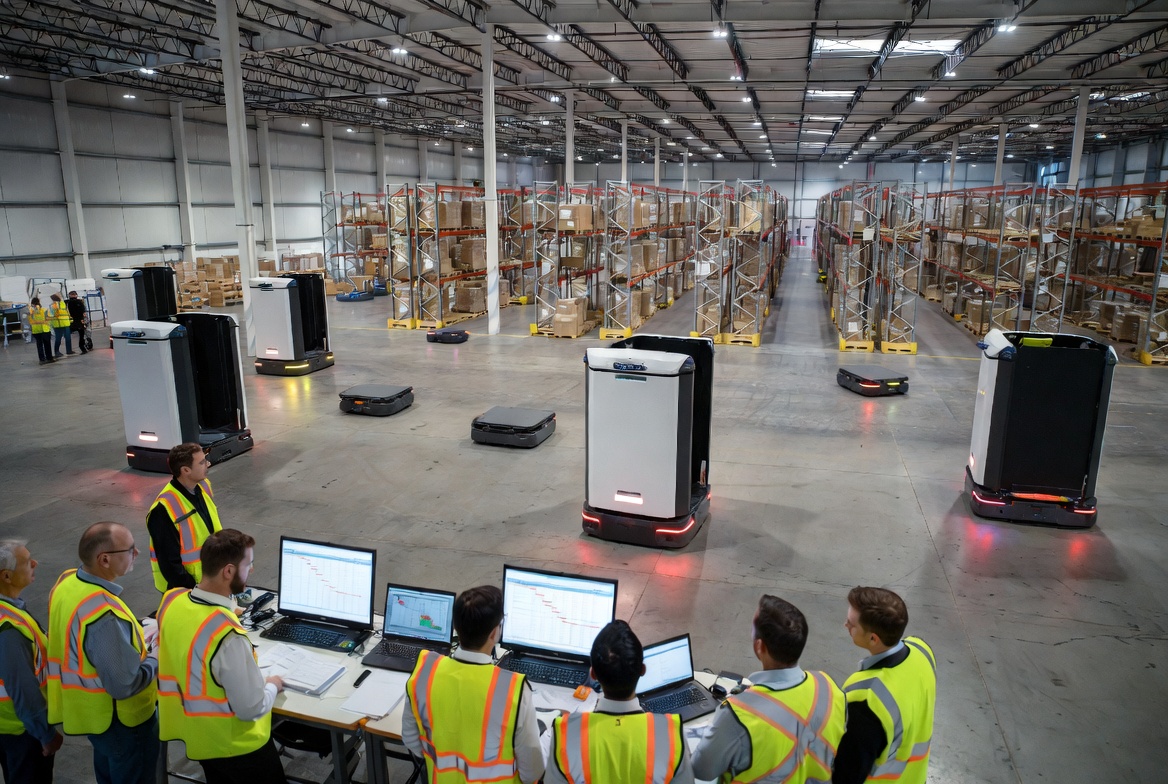
Top 7 Challenges in AGV Implementation Projects (And How to Overcome Them)
Many companies are surprised by the number of serious challenges that appear once AGV implementation begins. The truth is that even organizations that invest in a feasibility study can still encounter significant issues — particularly if the study was not thorough enough, was conducted by a vendor with a vested interest in selling equipment, or if its recommendations were not fully acted upon during the implementation phase.
A high-quality, independent feasibility study dramatically reduces these risks by identifying potential problems early. However, it does not remove all complexity from the implementation phase. AGV projects are inherently complex, and issues in one area can still cascade into others if not managed proactively.
Below are the seven challenges we see most frequently during AGV implementation — along with practical strategies to address them before they become expensive problems.
1. Facility Readiness Gaps
One of the most common and costly surprises is discovering that the facility itself is not ready for AGVs. Floors may not meet flatness requirements, WiFi coverage has dead zones, or the electrical infrastructure cannot support the charging stations needed for the planned fleet size.
Impact: AGVs cannot operate at designed speeds, navigation errors increase dramatically, and charging becomes a major bottleneck. These issues often surface only after vehicles arrive, leading to 4–10 weeks of delays and significant unplanned costs.
How to overcome it: A proper feasibility study must include a detailed floor assessment, WiFi heat mapping, and power analysis. Budget for remediation work early and complete it before equipment is delivered.
2. WMS/ERP Integration Complexity
Most legacy warehouse management and ERP systems were never designed to communicate in real time with autonomous vehicles. Data mapping issues, latency problems, and unexpected system limitations frequently appear during integration testing.
Impact: Delayed order fulfillment, frequent data mismatches, and heavy reliance on manual workarounds that destroy the expected ROI. Many projects experience their biggest delays during this phase.
How to overcome it: Involve IT and WMS teams from the beginning of the feasibility study. Plan for middleware development and allocate sufficient time for thorough integration testing before go-live.
3. Change Management and Workforce Resistance
Even the best technical solution will underperform if operators and supervisors resist the new system. Fear of job loss, frustration with new processes, and lack of proper training often lead to low adoption and the creation of manual workarounds.
Impact: Lower vehicle utilization, safety incidents, and failure to achieve the productivity gains projected in the feasibility study. In some cases, adoption issues persist for 6–12 months after go-live.
How to overcome it: Treat change management as a core workstream, not an afterthought. Involve operators early in the design process, communicate benefits clearly, and invest in role-specific training. The most successful projects we see actively involve floor teams in testing and process design.
4. Unrealistic Timelines and Long Lead Times
Many project schedules assume optimistic manufacturing lead times and ignore current vendor capacity constraints. Quality AGV systems often have lead times of 9–14 months, and engineering resources at reputable vendors are frequently booked solid.
Impact: Projects stall for months waiting for equipment. Momentum is lost and internal stakeholders lose confidence in the project.
How to overcome it: Build realistic lead times into the schedule from day one. Order long-lead items as soon as the detailed design phase is complete. Maintain regular communication with vendors about their capacity and potential delays.
5. Inadequate Testing Under Real Operational Conditions
Many projects test the system only during normal operating hours. They fail to properly test performance during peak periods, shift changes, or when multiple exceptions occur at the same time.
Impact: The system performs well in controlled testing but struggles or fails when real production pressure is applied. This is one of the leading causes of post-go-live firefighting.
How to overcome it: Schedule stress testing during actual peak periods whenever possible. Rigorously test exception handling, failure modes, and recovery procedures. Never go live without validating performance under realistic worst-case conditions.
6. Lack of Post-Go-Live Optimization and KPIs
Some companies treat go-live as the finish line. Without clearly defined KPIs and a structured optimization phase, small issues compound over time and the system never reaches its full potential.
Impact: The AGV system runs but consistently falls short of projected ROI. Continuous improvement efforts stall within 3–6 months after go-live.
How to overcome it: Define clear performance metrics during the feasibility study. Plan for a dedicated 3–6 month optimization and hypercare period after go-live, with dedicated resources assigned to fine-tuning and process improvement.
7. Scope Creep and Mid-Project Changes
New processes, additional pickup and drop-off points, or increases in volume are frequently introduced after the detailed design phase. Each change forces redesign work and extends the timeline.
Impact: Budget overruns, extended timelines, and sometimes a compromised final solution that tries to accommodate too many late changes.
How to overcome it: Establish a strict change control process after the detailed design is approved. Any scope changes should require formal impact assessment on both cost and schedule before being approved.
Real-World Example: How One Project Successfully Navigated Multiple Challenges
A large distribution center decided to move forward with AGVs without conducting a thorough, independent feasibility study. They relied primarily on vendor proposals and internal assumptions. Within the first few months of the project, they encountered multiple serious issues:
- Floor flatness problems across a significant portion of the facility that had not been properly assessed
- WMS integration bugs that only appeared during peak-load testing
- Strong resistance from operators and supervisors who had not been involved in the planning process
- Unrealistic timelines that ignored long equipment lead times
These issues caused the project to run nearly 12 months behind the original schedule and significantly over budget. The company eventually brought in an independent team to conduct a proper assessment and help get the project back on track. In contrast, clients who invested in a thorough, independent feasibility study upfront were able to identify and plan for these same types of risks early. As a result, their implementations experienced far fewer surprises, stayed much closer to the original timeline, and achieved faster ROI after go-live.
Summary of the 7 AGV Implementation Challenges
| Challenge | Typical Impact | Key Mitigation Strategy |
|---|---|---|
| Facility Readiness Gaps | Project delays, navigation issues | Detailed site audit during feasibility study |
| WMS/ERP Integration Complexity | Major delays during testing phase | Early IT involvement + realistic integration timeline |
| Change Management & Resistance | Low adoption, workarounds, safety issues | Involve operators early + dedicated training program |
| Unrealistic Timelines & Lead Times | Project stalls for months | Build realistic vendor lead times into schedule |
| Inadequate Peak-Load Testing | System struggles after go-live | Test during actual peak periods + exception handling |
| No Post-Go-Live Optimization Plan | ROI never fully realized | Define KPIs early + plan 3–6 month optimization phase |
| Scope Creep | Budget overruns and redesign work | Strict change control after detailed design approval |
Key Takeaways
- Most AGV implementation challenges are predictable and manageable when identified early through proper planning.
- A high-quality, independent feasibility study should surface the majority of these risks — not just recommend vehicle quantities.
- Even with excellent upfront planning, successful AGV projects require strong execution discipline, realistic timelines, and a structured post-go-live optimization phase.
Related reading: From Feasibility Study to Go-Live: Realistic AGV Implementation Timelines and What to Expect During an AGV Feasibility Study.
Ready to minimize these risks in your next AGV project?
Book Your Feasibility Study Today →