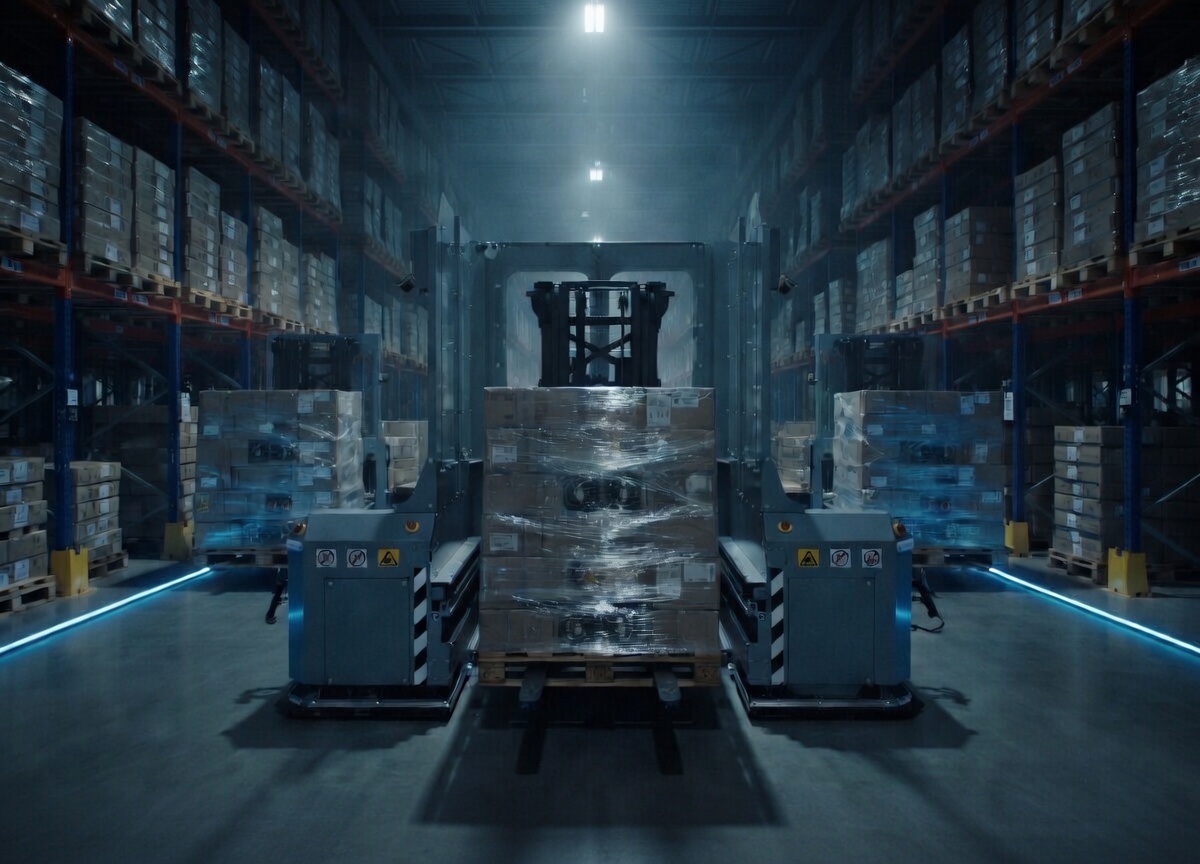
Narrow-Aisle AGV Systems: How to Know If They’re Right for Your Facility
Space is the most expensive asset in modern warehousing and manufacturing. Narrow-aisle AGV systems promise to reclaim valuable square footage while maintaining—or even increasing—throughput. But many projects fall short because the system was never properly matched to the actual facility, processes, and constraints.
Why Narrow-Aisle AGVs Are Gaining Traction in 2026
With rack heights reaching 40+ feet and aisle widths shrinking to 5–6 feet, traditional forklifts are no longer viable. AGVs designed for narrow aisles offer precise navigation, 24/7 operation, and integration with WMS/ERP. Yet success depends on far more than hardware specs.
The 6 Critical Factors a Feasibility Study Evaluates
Before investing in narrow-aisle AGVs, Nexus V’s fixed-price Feasibility Study (delivered in 3–4 weeks for $8,500–$15,000) examines these six make-or-break elements:
- Facility Layout & Aisle Dimensions – Exact measurements, floor flatness, ceiling clearance, and column placement determine vehicle type and guidepath feasibility.
- Throughput & Volume Requirements – Peak and average moves per hour, shift patterns, and future growth projections.
- Integration with Existing Systems – Compatibility with your current WMS, ERP, conveyors, and safety infrastructure.
- Safety & Regulatory Compliance – ANSI/ITSDF B56.5 standards, pedestrian interaction zones, and hazardous material considerations.
- Financial Analysis & ROI – Full 5-year TCO including maintenance, training, and infrastructure upgrades (see our earlier post on the real cost of automation projects).
- Risk Register & Implementation Roadmap – All potential pitfalls with mitigation steps and phased rollout plan.
These four deliverables—Project Background and Current State Assessment, Proposed Solution & Technical Feasibility, Financial Analysis & ROI Assessment, and Risks, Mitigation & Implementation Roadmap—give you objective data before any vendor proposal.
Common Pitfalls We See (and How to Avoid Them)
Without upfront analysis, companies often discover mid-project that their floor needs reinforcement, power infrastructure is inadequate, or the chosen AGV model cannot handle the required speed in tight turns.
A professional feasibility study surfaces these issues early, so you can adjust scope, choose the right vendor-agnostic solution, or even decide AGVs are not the best fit—saving hundreds of thousands in the process.
Ready to Protect Your Next Automation Investment?
Don’t guess whether narrow-aisle AGVs are right for your operation. Get clarity in 3–4 weeks.
Ready to protect your next automation investment?
Book Your Feasibility Study Today →