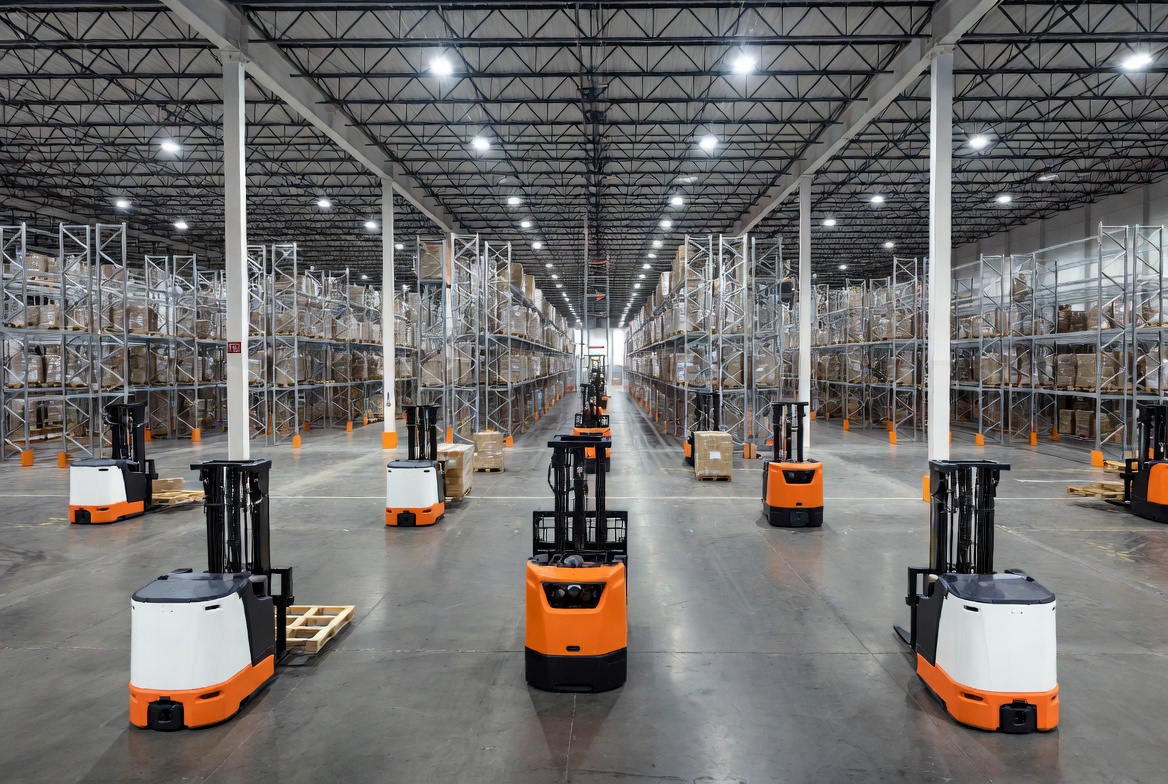
How Many AGVs Do You Really Need? The Correct Way to Size Your AGV Fleet
One of the most expensive mistakes in AGV projects is getting the fleet size wrong. Buy too few vehicles and you create bottlenecks that eliminate the productivity gains you expected. Buy too many and you tie up hundreds of thousands — sometimes millions — in unnecessary capital. Correct AGV fleet sizing is both science and strategy. It requires detailed operational data, realistic assumptions about utilization, charging strategy, layout constraints, and future growth. In this article we walk through the proven 6-step method that leading manufacturers and warehouses use to determine the right number of AGVs their operation truly needs.
Why Most Fleet Sizing Calculations Fail
Many companies rely on simple “rules of thumb” from vendors or basic headcount replacement formulas. These approaches ignore real-world variables such as peak-hour demand, charging time, maintenance windows, traffic congestion, and layout inefficiencies — leading to either chronic under-capacity or significant capital waste.
The Correct 6-Step AGV Fleet Sizing Method
1. Map Every Material Flow in Detail
Document every move: frequency per hour/shift, distance, load size, origin, destination, and any special requirements. Include both average and peak volumes. This step alone often reveals hidden inefficiencies in current operations. For a complete checklist of everything you should evaluate before sizing your fleet, see our guide - How to Prepare Your Facility for AGV Implementation.
2. Calculate Required Moves per Hour
Determine total moves needed during peak periods. Factor in inbound receiving, outbound shipping, production line replenishment, and any inter-warehouse transfers.
3. Determine Realistic Cycle Time per Move
Measure or accurately estimate travel time, pick-up/drop-off time, waiting time, and any traffic-related delays.
4. Factor in Utilization and Efficiency Losses
Realistic AGV utilization is typically 75–85%. Account for charging, preventive maintenance, and path conflicts.
5. Choose and Model Your Charging Strategy
Opportunity charging versus battery swapping dramatically affects the number of vehicles required. Proper battery management and charging infrastructure are critical to achieving the utilization rates assumed in your fleet calculation. For detailed strategies on maximizing battery life and uptime, read AGV Battery Management and Charging Strategies.
6. Run Sensitivity and Growth Analysis
Test different growth scenarios, shift patterns, and layout changes to ensure the fleet size will scale efficiently for the next 3–5 years.
Real-World Example: Sizing a Fleet for a 200,000 sq ft Distribution Center
A recent client operated a 200,000 square foot distribution center that moved approximately 1,200 pallets per day across 18 different pick-up and drop-off points. An AGV vendor they were working with initially proposed a fleet of only 9 vehicles based primarily on average daily volume. However, when we performed a detailed feasibility study using the client’s actual operational data, we determined that 14 AGVs were required.
| Factor | Vendor Proposal (9 AGVs) | Recommended (14 AGVs) |
|---|---|---|
| Peak Hourly Demand | 90 pallets/hour | 130 pallets/hour |
| Bottleneck Risk During Peak Hours | High (long waits for trucks & lines) | Minimal |
| Realistic Fleet Utilization | Overestimated (95%) | Realistic (80%) |
| Projected 3-Year ROI | Baseline | +28% higher |
The additional five vehicles eliminated peak-hour congestion, reduced waiting times for inbound trucks and production lines, minimized aisle traffic jams, and provided a safety buffer for scheduled maintenance. As a result, the client achieved significantly higher daily throughput than originally projected and realized a 28% higher ROI over the first three years compared to the vendor’s initial 9-vehicle recommendation.
This example illustrates why a thorough, data-driven analysis during the feasibility phase is critical rather than relying on simplified vendor calculations.
The Role of a Professional Feasibility Study
A professional feasibility study is the best place to begin determining whether AGVs are the right solution for your operation and to get a reliable high-level estimate of how many vehicles you will likely need. It evaluates your actual material flows, assesses technical feasibility for your specific facility and layout, provides a preliminary fleet size recommendation, delivers a realistic ROI projection based on your data, identifies key risks, and gives you a clear implementation roadmap — all before you commit to detailed design or equipment purchase. Review our feasibility study scope to understand exactly what you receive and why it is the proper first step before sizing or purchasing any AGV system.
Ready to Right-Size Your AGV Fleet?
Stop guessing and start with data. Get an independent assessment tailored to your exact operation so you invest in exactly the right number of vehicles — no more, no less.
Ready to protect your next automation investment?
Book Your Feasibility Study Today →