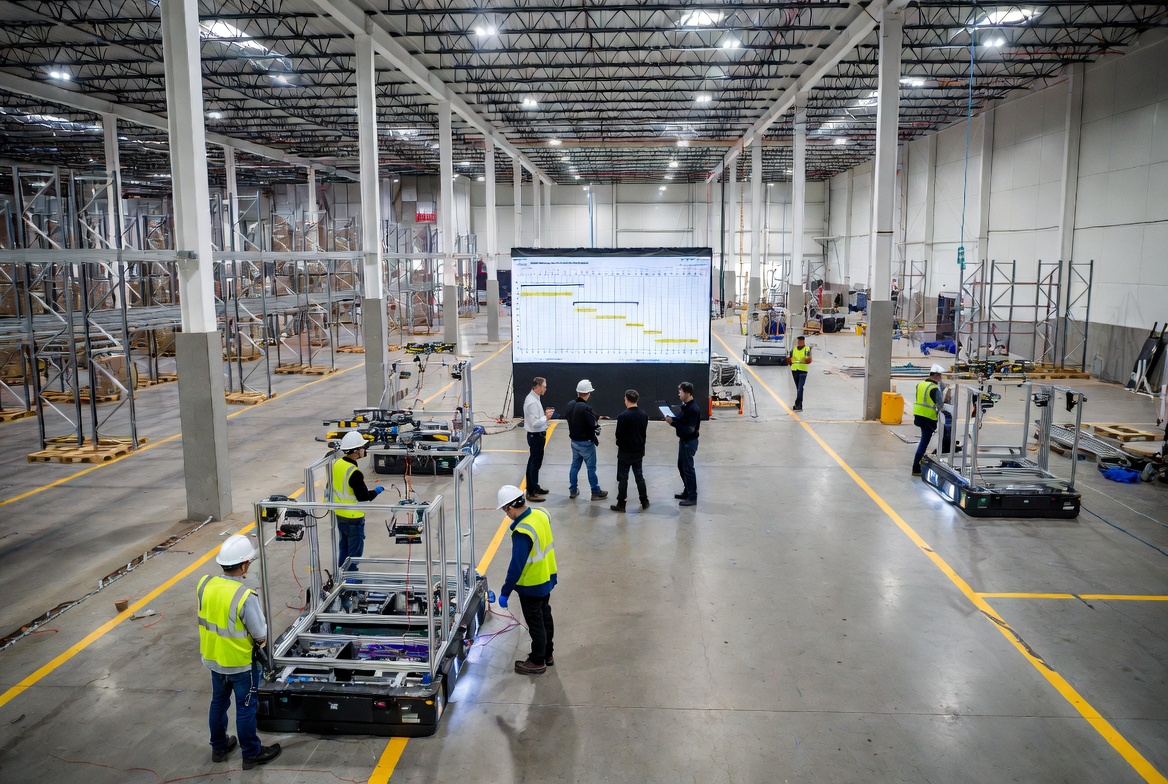
From Feasibility Study to Go-Live: Realistic AGV Implementation Timelines and Key Milestones
One of the most common questions we hear after delivering a feasibility study is: “How long will it actually take to get the AGVs up and running?” The honest answer is that a well-managed AGV project typically takes 18-24 months from the end of the feasibility study to full production go-live. Timelines vary greatly based on project size, complexity, facility readiness, and integration requirements.
In this article we share realistic timelines, the 8 key phases of implementation, common delay factors, and what you can do to keep your project on track.
Typical AGV Implementation Timeline (After Feasibility Study)
- Small / Simple Projects (basic tasks, basic flows): 8-12+ months
- Medium Complexity Projects (moderate integration, some facility work): 12-18+ months
- Large or Complex Projects (high integration, major infrastructure changes): 18-24+ months
The 8 Key Phases and Realistic Durations
1. Detailed Design & Engineering (12-16+ weeks)
The vendor develops final layouts, traffic rules, charging strategy, and integration specifications based on the feasibility study recommendations.
2. Facility Modifications (4–12+ weeks)
Floor repairs, WiFi/network upgrades, safety fencing, charging station installation, and any layout changes identified in the study.
3. Equipment Procurement & Manufacturing (40-52+ weeks)
Lead time for AGVs, conveyor, racking, chargers, etc. Ordering vehicles early is critical to avoid delays.
4. Software Development & Integration (12-16+ weeks)
Custom middleware and integration with your WMS/ERP/MES systems often runs in parallel with manufacturing.
5. Installation & Commissioning (2-12+ weeks)
Vehicles arrive on site, are set up, and the system is commissioned.
6. Testing & Validation (8-12+ weeks)
Extensive testing during normal and peak operation, including failure mode testing and performance validation.
7. Training (1-2+ weeks)
Operator, maintenance, and supervisor training plus change management activities.
8. Go-Live & Hypercare Period (2–4 weeks)
Full production operation with vendor support to resolve any remaining issues quickly.
Real-World Example
A 320,000 sq ft chemical manufacturing warehouse completed its feasibility study in March 2023. The project involved 10 AGVs, moderate WMS integration, and targeted floor repairs in high-traffic zones.
The vendor initially quoted 18 months to go-live. Our independent study projected a more realistic 24-month timeline. Following project approval, the client followed the recommended phased approach and went live in August 2025 — just under the 24 month target timeline outline in the feasibility study.
Because the feasibility study had accurately identified WiFi dead zones, floor flatness issues, and integration complexity, the client avoided the typical 3–6 month post-go-live firefighting period that many projects experience. The system achieved 90% uptime within the first month of operation.
Factors That Accelerate or Delay Your Project
Understanding these variables helps you set accurate expectations and proactively manage risks.
- Poor or incomplete facility readiness – Unaddressed floor issues, WiFi coverage gaps, or power infrastructure problems can add 3–8 months. Mitigation: Complete all recommended modifications before equipment arrives.
- WMS/ERP integration complexity – Legacy systems often require extensive custom middleware. Mitigation: Start integration work immediately after project approval.
- Long equipment lead times – AGVs, especially custom models, can take over a year to manufacture and test. Mitigation: Order vehicles as soon as the detailed design is approved.
- Change management and workforce resistance – Operators and supervisors who are not properly trained or involved early can slow adoption. Mitigation: Include training and communication in the project plan from day one.
- Scope creep after the feasibility study – Adding new flows or changing requirements late in the project. Mitigation: Lock scope after detailed design approval.
- Testing during peak production only – Many projects fail to test under real peak conditions. Mitigation: Schedule full-load testing during actual busy periods.
- Vendor resource constraints – Some integrators are stretched thin. Mitigation: Choose partners with proven bandwidth and strong project management.
Ready to Move Forward with Confidence?
A clear, realistic timeline is one of the most valuable outputs of a professional feasibility study. Knowing what to expect — and what can go wrong — lets you plan effectively and avoid the expensive surprises that derail so many automation projects.
Ready to protect your next automation investment?
Book Your Feasibility Study Today →