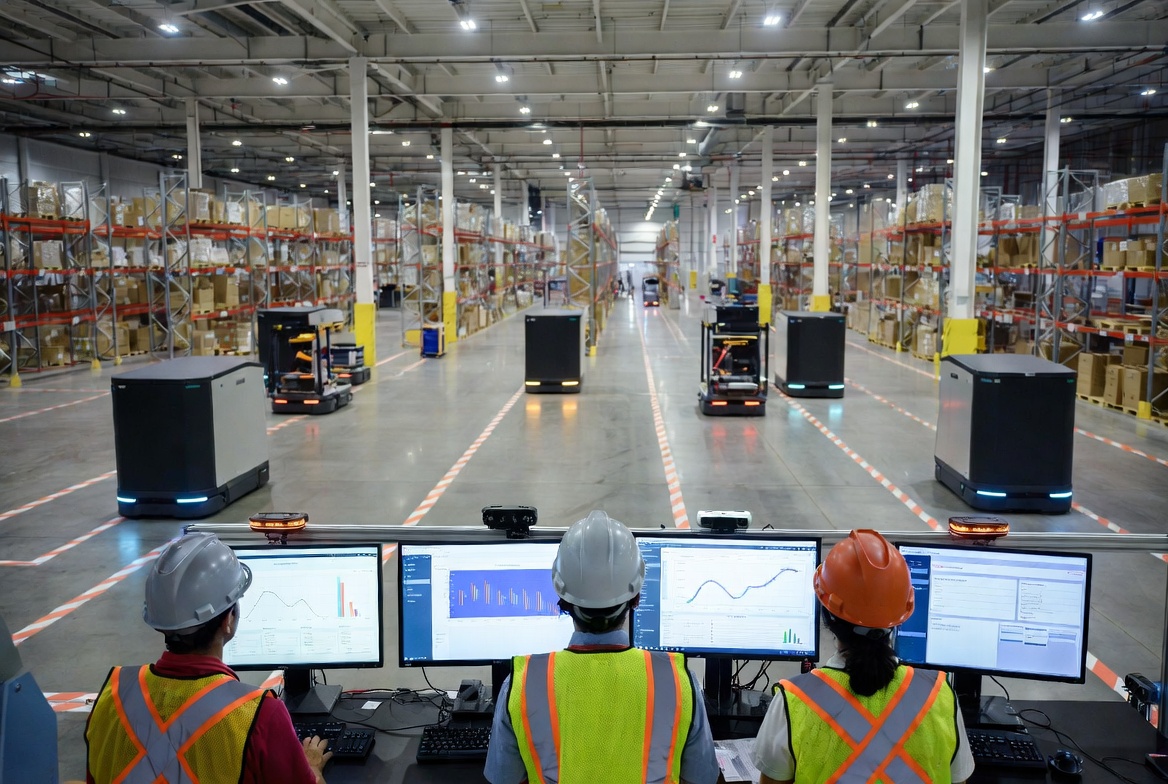
AGV System Integration: How to Successfully Connect AGVs with Your WMS and ERP
AGVs deliver maximum value only when they operate as a fully integrated part of your warehouse ecosystem. Connecting them seamlessly to your Warehouse Management System (WMS) and Enterprise Resource Planning (ERP) system is one of the most critical success factors in any AGV project. Without strong integration, AGVs often function as isolated assets. Orders must be manually entered, inventory updates lag behind reality, and exception handling becomes slow and error-prone. The result is lower utilization, frustrated operators, and ROI that falls short of projections. Proper integration eliminates these friction points and turns AGVs into a high-performance extension of your existing systems.
Why AGV–WMS–ERP Integration Is Essential for ROI
Strong integration creates a continuous data loop: orders flow automatically from the ERP into the WMS, tasks are assigned dynamically to AGVs, and every movement updates inventory in real time. This reduces manual work, improves order accuracy, shortens cycle times, and provides the visibility needed for continuous improvement. Companies that invest in robust integration typically see 15–30% higher AGV utilization and significantly faster payback periods compared to those that rely on basic or manual interfaces.
Key Areas of AGV System Integration
1. Order and Task Flow
The WMS should automatically generate and prioritize tasks for the AGV fleet based on orders received from the ERP. This includes pick, put-away, replenishment, and cycle-count tasks. Dynamic task allocation based on vehicle location, battery level, and load type ensures optimal efficiency.
2. Real-Time Inventory Synchronization
Every AGV movement must instantly update inventory records in both the WMS and ERP. This prevents stock discrepancies, supports accurate demand planning, and enables reliable order promising to customers.
3. Location and Status Visibility
AGV locations, operational status (idle, busy, charging, error), and performance metrics should be visible in a comprehensive dashboard. This gives supervisors real-time insight and enables faster exception handling.
4. Exception Handling and Alerts
The integrated system must gracefully manage exceptions such as blocked paths, missing items, or equipment issues and push clear alerts to the right teams through the WMS or ERP interfaces.
Best Practices for Successful Integration
Define a Clear Integration Architecture Early
Discuss the ideal data flow (ERP → WMS → AGV Fleet Management Software → AGVs) during the feasibility study. Choose between direct APIs, middleware, or a unified platform based on your existing technology stack and future scalability needs.
Involve Cross-Functional Teams from the Start
Bring together IT, automation partners, operations, warehouse leadership, and the AGV vendor early. Integration projects succeed when all stakeholders understand requirements and constraints from day one.
Test Extensively in a Staging Environment
Simulate real-world conditions including peak volumes, error scenarios, partial shipments, and network interruptions before go-live. Thorough testing prevents costly disruptions during the critical ramp-up period.
Plan for Scalability and Future Automation
Choose integration methods that can grow with your fleet and support additional automation (conveyors, AS/RS, robotic picking, etc.) without major rework.
Establish Clear Governance and Change Management
Define who owns data quality, exception resolution, and system performance. Combine technical integration with strong change management so operators and supervisors understand and trust the new workflows.
Common Integration Challenges and Solutions
| Challenge | Typical Impact | Recommended Solution |
|---|---|---|
| Legacy system limitations | Slow or unreliable data exchange | Use middleware or API gateway with caching and retry logic |
| Data format mismatches | Manual reconciliation required | Standardize on consistent data models and mapping early |
| Real-time vs batch processing | Delayed inventory updates | Prioritize real-time APIs for critical movements |
| Exception handling gaps | Manual intervention and delays | Build clear escalation paths and automated alerts |
| Change resistance from staff | Workarounds and low utilization | Combine technical integration with strong training and communication |
Real-World Examples
Example 1: A large distribution center initially used a file-based interface between its WMS and AGV software. During peak seasons, task assignment lagged by 20–40 minutes, causing significant bottlenecks. After moving to real-time API integration with the ERP and WMS, order processing time dropped by 35% and inventory accuracy improved from 85% to +98%.
Example 2: A manufacturing plant integrated its AGVs directly with both the ERP (for production orders) and WMS (for warehouse movements). By including predictive exception handling and clear escalation rules, the company reduced manual interventions by over 60% and achieved full projected ROI two months earlier than originally forecasted.
Key Takeaways
- Strong WMS and ERP integration is one of the highest-leverage investments in any AGV project.
- Focus on real-time data flow, robust exception handling, and scalability from the feasibility stage.
- Involve IT, operations, and the AGV vendor early to avoid costly rework later.
- Thorough testing and clear governance dramatically reduce go-live risk.
- Integration quality directly drives utilization, accuracy, and long-term ROI.
Related reading: AGV Change Management: How to Prepare Your Workforce for Successful Automation Adoption and AGV Safety Systems: Essential Features and Best Practices for Safe Operations.
Ready to protect your next automation investment?
Book Your Feasibility Study Today →