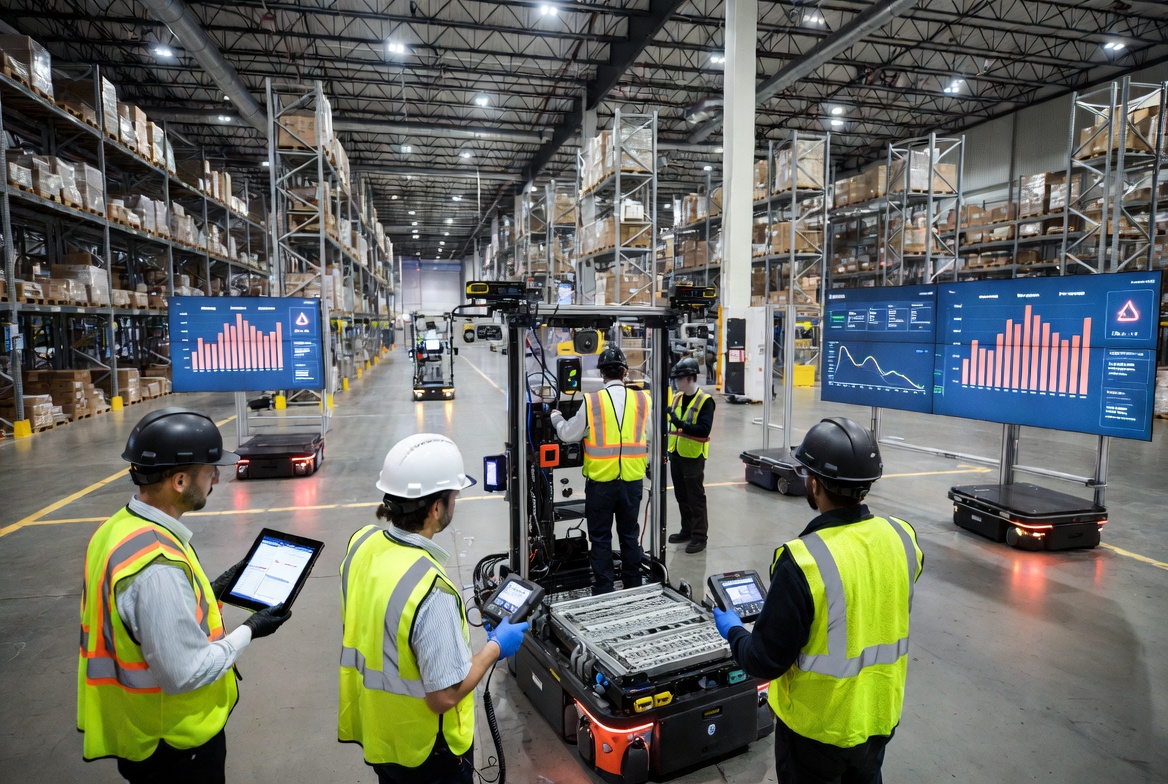
AGV Predictive Maintenance: How Data-Driven Strategies Can Prevent Downtime and Maximize ROI
Traditional reactive maintenance — fixing AGVs only after they break down — is one of the fastest ways to destroy ROI. Unexpected downtime, emergency repairs, and rushed parts orders quickly erode the productivity gains you expected from automation. Predictive maintenance changes the game. By using sensors, IoT devices, and advanced analytics, you can detect potential failures days or weeks before they occur. This allows you to schedule maintenance proactively, minimize unplanned stops, and significantly extend the life of your AGV fleet.
Why Predictive Maintenance Matters for AGV ROI
AGVs are complex machines with motors, batteries, sensors, wheels, and navigation systems. A single failure can halt an entire production line or warehouse operation. Studies and real-world implementations consistently show that moving from reactive to predictive maintenance can reduce unplanned downtime by 30–50% and lower maintenance costs by 20–40%.
Beyond direct cost savings, predictive maintenance improves safety (by catching issues before they become hazards), increases overall equipment effectiveness (OEE), and provides valuable data for continuous improvement and better capital planning.
Key Components of an Effective AGV Predictive Maintenance Program
1. Sensors and IoT Connectivity
Modern AGVs are equipped with or can be retrofitted with vibration sensors, temperature monitors, current/voltage sensors, battery health monitors, and wheel/encoder data. These feed real-time information into a central system.
2. Data Collection and Integration
Data from AGVs should integrate with your fleet management software, WMS, and maintenance management system (CMMS or EAM). Historical data combined with real-time readings creates powerful insights.
3. Analytics and Machine Learning
Simple threshold alerts (e.g., “vibration exceeds X”) are a start. Advanced programs use machine learning models trained on your specific fleet’s data to predict failures with increasing accuracy over time.
4. Actionable Workflows and Alerts
The system must translate insights into clear work orders, prioritized by severity and impact on operations. Integration with maintenance teams ensures timely action.
Benefits of Predictive Maintenance for AGVs
- Significant reduction in unplanned downtime
- Lower overall maintenance and repair costs
- Extended lifespan of critical components (motors, batteries, drives)
- Improved safety through early detection of mechanical issues
- Better spare parts planning and inventory management
- Data-driven insights for fleet optimization and future purchasing decisions
How to Get Started with AGV Predictive Maintenance
- Start small — Pilot on a subset of your fleet or focus on the most critical/high-utilization vehicles.
- Define key failure modes — Work with your vendor and maintenance team to identify the most common and costly failures (e.g., motor issues, battery degradation, wheel wear).
- Choose the right metrics — Vibration, temperature trends, battery cycle data, current draw anomalies, and navigation error rates are excellent starting points.
- Integrate systems — Connect AGV data with your existing maintenance and operations platforms.
- Train your team — Maintenance technicians and supervisors need to understand the new alerts and workflows.
- Measure and refine — Track metrics like MTBF (Mean Time Between Failures), unplanned downtime hours, and maintenance cost per operating hour. Continuously improve your models.
Real-World Example
A large distribution center running 10 AGVs was experiencing frequent motor failures that caused major bottlenecks. After implementing vibration and temperature monitoring with predictive analytics, they reduced unplanned motor-related downtime by 65% in the first year. Maintenance costs dropped by over 30%, and they were able to extend motor replacement intervals with confidence. The project paid for itself in under 14 months.
Key Takeaways
- Reactive maintenance is expensive and risky for AGV operations.
- Predictive maintenance uses real data to anticipate failures before they occur.
- Success requires the right sensors, data integration, analytics, and trained people.
- Start with a focused pilot and scale based on proven results.
- Predictive maintenance directly protects and enhances your AGV ROI.
Related reading: How to Build an Effective AGV Maintenance Program, AGV KPIs: 8 Essential Metrics to Measure for Maximum ROI, and AGV Total Cost of Ownership (TCO).
Ready to protect your next automation investment?
Book Your Feasibility Study Today →