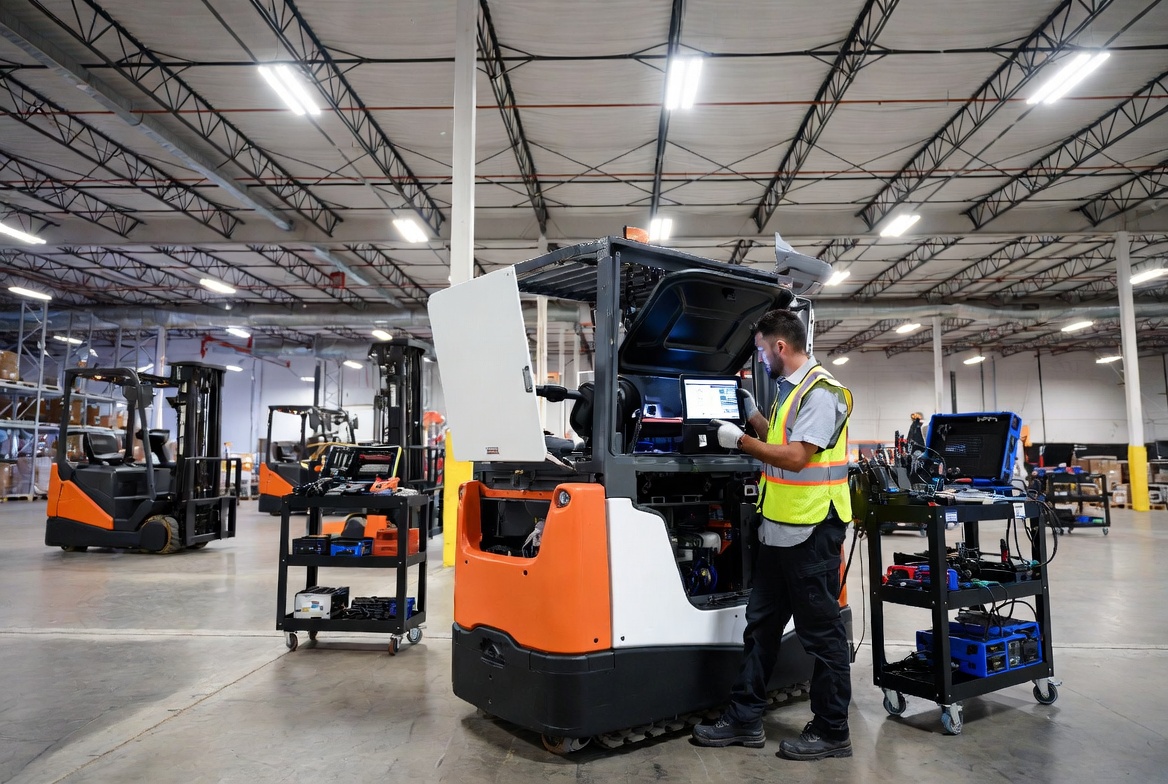
How to Build an Effective AGV Maintenance Program: Strategies to Maximize Uptime and ROI
Even the best AGV system will underperform if maintenance is treated as an afterthought. Many facilities see uptime drop from 98% to below 80% within the first year simply because they lack a structured maintenance program. A well designed AGV maintenance program doesn’t just prevent breakdowns — it directly protects and even increases your return on investment. Here are the proven strategies that top-performing operations use to keep their fleets running at peak efficiency.
Why Maintenance Is One of the Biggest ROI Levers
Every hour of unplanned downtime costs thousands in lost productivity. A proactive maintenance program reduces emergency repairs, extends equipment life, and keeps throughput predictable.
8 Essential Components of a High-Performance AGV Maintenance Program
1. Establish a Preventive Maintenance Schedule
Follow manufacturer guidelines for daily, weekly, monthly, and quarterly tasks. Track everything in a CMMS or fleet management software so nothing falls through the cracks.
2. Train Your Team Properly
Maintenance technicians and operators need specific AGV training. Cross-training reduces dependency on outside service technicians and speeds up response times.
3. Monitor Battery Health Religiously
Battery issues cause over 40% of AGV downtime. Implement daily battery checks, proper charging protocols, and timely replacements.
4. Use Real-Time Fleet Monitoring
Modern AGV systems provide rich diagnostic data. Set up alerts for abnormal behavior so issues can be addressed before they cause downtime.
5. Keep Critical Spare Parts on Hand
Identify the most failure-prone components and maintain a strategic spare parts inventory so repairs don’t wait for shipping.
6. Document Everything
Complete maintenance logs help identify recurring issues, support warranty claims, and make it easier to justify future capital requests.
7. Partner with the Right Service Provider
Choose a maintenance partner who understands your specific AGV models and can respond quickly when needed.
8. Conduct Regular Performance Audits
Every 6–12 months, review fleet performance metrics and update your maintenance program based on real data.
The Smartest First Step
The best AGV maintenance programs start during the feasibility study phase — when you can plan spare parts, training, and service contracts before equipment even arrives. Review our feasibility study scope to understand how we help clients build maintenance strategies that protect long-term ROI from day one.
Ready to Protect Your AGV Investment?
Don’t let poor maintenance erode your returns. Build a program that keeps your fleet running at maximum efficiency.
Ready to protect your next automation investment?
Book Your Feasibility Study Today →