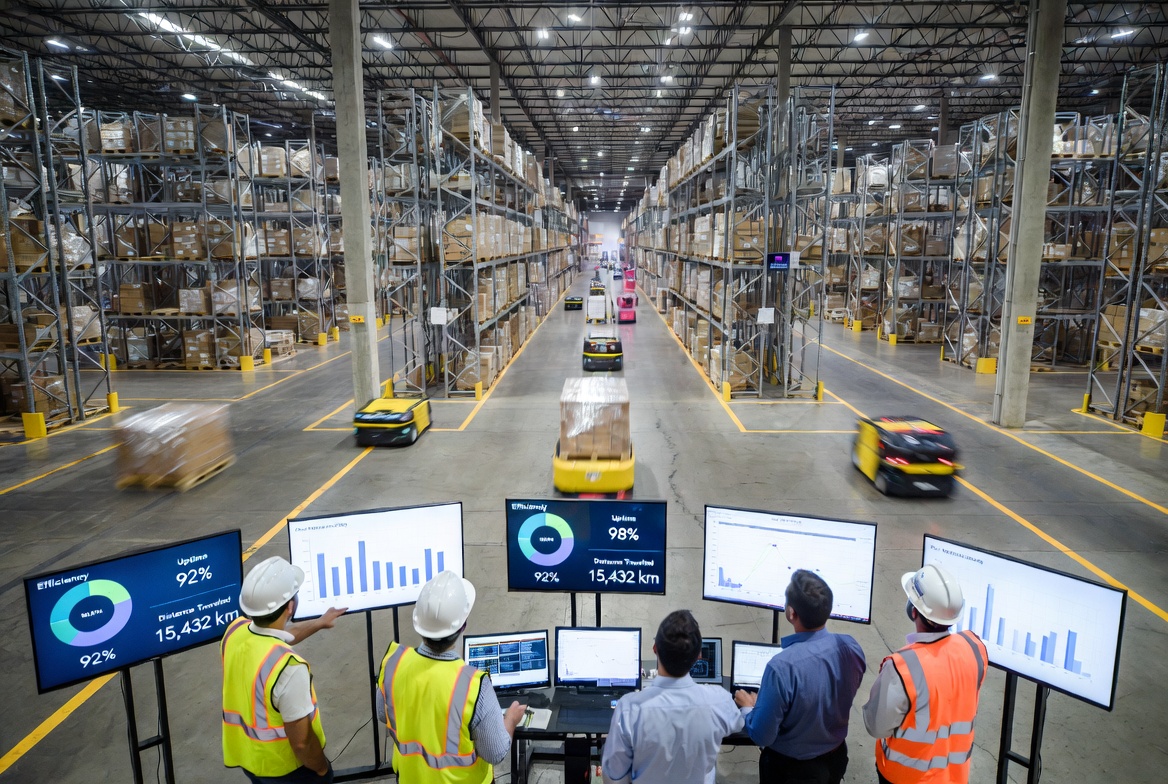
AGV KPIs: 8 Essential Metrics to Measure for Maximum Return on Investment
Many companies invest heavily in AGVs and expect strong returns, only to realize months after go-live that they lack the data needed to show, and improve, performance. The difference between a successful AGV system and one that under-delivers often comes down to the KPIs being tracked and acted upon.
The best AGV implementations begin to define these metrics during the feasibility study phase and build reporting mechanisms and review processes into the project scope from day one. Here are the 8 essential KPIs that leading facilities monitor to maximize ROI.
1. System Uptime / Availability Rate
Percentage of scheduled operating time that the AGV fleet is available and ready to work (excluding planned maintenance).
Why it matters: Low uptime directly erodes the labor savings and throughput gains projected in your feasibility study.
How to measure: (Total available hours − Downtime hours) / Total available hours × 100. Target: 95%+ for well-maintained systems.
2. Throughput (Units or Pallets Moved per Hour)
The actual volume of material moved by the AGV system during peak and average periods.
Why it matters: This is the core productivity metric. It shows whether the system is delivering the capacity promised in the original business case.
How to measure: Total units/pallets moved ÷ Operating hours. Compare against baseline manual operations and feasibility projections.
3. Fleet Utilization Rate
Percentage of time AGVs are actively moving with a load versus idle or traveling empty.
Why it matters: High utilization means you are getting maximum value from your capital investment. Low utilization often indicates poor routing, excessive charging, or over-fleeting.
How to measure: Loaded travel time / Total available time × 100. Strong systems typically achieve 60–75% utilization.
4. Average Cycle Time
The average time it takes for an AGV to complete a full task (pick-up to drop-off, including travel and waiting).
Why it matters: Shorter, more consistent cycle times improve overall warehouse velocity and reduce the number of vehicles needed.
How to measure: Total task completion time ÷ Number of completed tasks. Track trends over time and by route type.
5. Energy Efficiency (kWh per Move or per km)
Energy consumed per task or per distance traveled.
Why it matters: Rising energy costs and sustainability goals make this metric increasingly important. It also reveals battery health and charging strategy effectiveness.
How to measure: Total kWh used ÷ Total moves (or km traveled). Look for optimization opportunities in charging schedules and route planning.
6. Navigation Accuracy / Mission Success Rate
Percentage of missions completed without navigation errors, collisions, or manual intervention.
Why it matters: High error rates increase downtime, create safety risks, and frustrate operators.
How to measure: Successful autonomous missions ÷ Total missions attempted × 100. Target 99%+ for mature systems.
7. Safety Performance
Number of safety incidents, near misses, or emergency stops per 1,000 operating hours.
Why it matters: Safety is non-negotiable. Tracking this metric helps identify layout or process issues before they cause injuries or costly downtime.
How to measure: Total safety events ÷ (Total operating hours ÷ 1,000). Aim for continuous reduction toward zero.
8. Cost per Move & ROI Tracking
Total cost of ownership (energy, maintenance, labor for oversight, depreciation) divided by the number of moves completed.
Why it matters: This is the ultimate financial KPI. It directly shows whether the AGV system is delivering the payback projected in the feasibility study.
How to measure: Total relevant costs ÷ Total moves. Track monthly and compare against baseline manual cost per move.
Real-World Example
A mid-sized distribution center went live with 22 AGVs. For the first four months they only tracked uptime and basic throughput. Performance looked acceptable on paper, but labor savings were 18% below projections. After implementing a full KPI dashboard (including utilization, cycle time, and cost per move), they discovered that 40% of AGV time was spent traveling empty due to poor route optimization. By adjusting traffic rules and adding dynamic routing, they increased utilization from 48% to 67% within 90 days — without adding vehicles. The system reached its original ROI target six months earlier than expected.
Summary Table: 8 Key AGV KPIs
| KPI | Primary Focus | Typical Target Range |
|---|---|---|
| Uptime / Availability | Reliability | 95%+ |
| Throughput | Productivity | Exceed baseline + feasibility projection |
| Fleet Utilization | Efficiency | 60–75% |
| Cycle Time | Speed & Consistency | Improving trend month-over-month |
| Energy Efficiency | Cost & Sustainability | Stable or improving |
| Navigation Accuracy | Reliability & Safety | 99%+ |
| Safety Performance | Risk Reduction | Zero incidents, declining near-misses |
| Cost per Move | Financial ROI | Below manual baseline + improving |
Key Takeaways
- Define these KPIs during from the beginning — not after go-live.
- Build automated dashboards and schedule regular performance reviews (weekly or monthly).
- Use the data to drive continuous improvement, not just reporting.
- Compare actual results against the projections in your original feasibility study to validate ROI.
Related reading: Top 7 Challenges in AGV Implementation Projects and From Feasibility Study to Go-Live: Realistic AGV Implementation Timelines.
Ready to protect your next automation investment?
Book Your Feasibility Study Today →