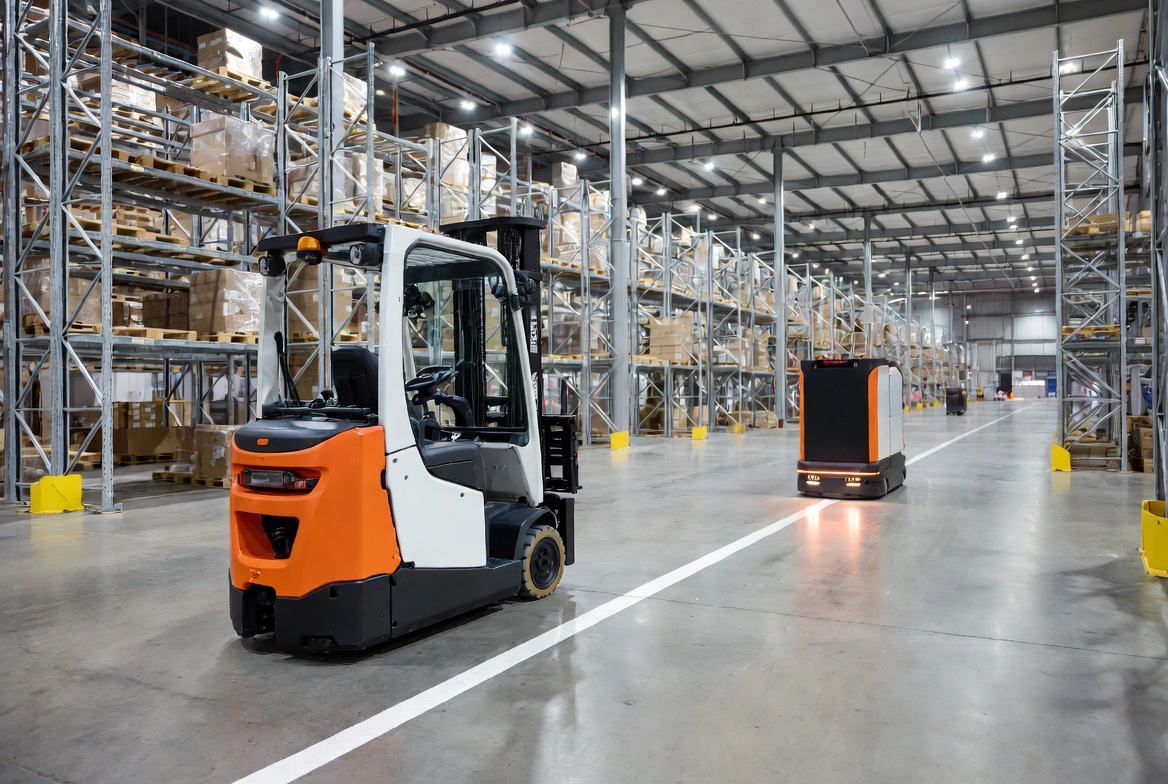
AGV vs AMR: Which Autonomous Technology Is Right for Your Facility in 2026?
The global market for autonomous mobile robots and guided vehicles continues to expand rapidly as manufacturers and warehouses seek to reduce labor dependency and increase throughput. While both AGVs (Automated Guided Vehicles) and AMRs (Autonomous Mobile Robots) move materials without human drivers, they are fundamentally different technologies with distinct strengths and limitations.
One of the most important — and often overlooked — differences is lifting capability. AGVs are capable of lifting loads from the floor to elevated positions (such as racking or conveyors), while most AMRs are designed primarily for horizontal transport between fixed heights. Understanding this distinction, along with navigation, flexibility, cost, and safety factors, is essential before making a significant automation investment.
What Are AGVs and How Do They Work?
Automated Guided Vehicles have been used successfully in warehouses and factories for decades. They follow predetermined paths using physical or virtual guidance systems such as magnetic tape, embedded wires, QR codes, lasers, or reflective markers. Because their routes are fixed, AGVs deliver highly predictable performance in structured environments. Modern AGVs — especially autonomous forklifts — can handle heavy payloads and perform vertical movements, making them well-suited for tasks that require lifting from floor level to elevated storage or workstations.
What Are AMRs and How Do They Work?
Autonomous Mobile Robots use onboard sensors (LiDAR, cameras, 3D vision) and Simultaneous Localization and Mapping (SLAM) technology to navigate dynamically in real time. They can reroute around obstacles and adapt to changing layouts without physical infrastructure changes. Most AMRs are optimized for horizontal transport between fixed heights. While some advanced models offer limited lifting capability, they are generally not designed for the same range of vertical movement that traditional or autonomous forklifts provide.
AGV vs AMR: Key Differences
Lifting Capability & Vertical Movement
AGVs (particularly forklift-style models) can pick loads from the floor and place them at elevated positions such as racking, conveyors, or workstations. This makes them highly effective for full pallet handling and vertical storage/retrieval tasks.
AMRs are typically designed for transport between locations at the same or fixed height. While some advanced models offer limited lifting capability, they generally do not match the vertical range and payload flexibility of AGV forklifts for floor-to-elevation movements.
Navigation & Flexibility
AGVs follow fixed paths and usually require infrastructure. Changing routes often involves physical modifications. AMRs use dynamic navigation and can adapt quickly to layout changes through software updates.
Payload & Application Fit
AGVs excel with heavy, consistent pallet loads and vertical storage/retrieval. AMRs are often better for lighter loads, piece-picking, and dynamic environments where routes and destinations change frequently.
Deployment Time & Infrastructure
AGV projects typically require more upfront engineering and floor preparation. AMR projects can often be deployed faster with minimal physical infrastructure changes.
Safety & Human Interaction
Both include safety systems, but AMRs generally offer superior real-time obstacle avoidance, making them well-suited for mixed human-robot environments.
When to Choose AGVs
AGVs are the stronger choice when your operation involves:
- Heavy pallet loads that require lifting from floor to elevated positions
- Stable, high-volume material flows on consistent routes
- Narrow-aisle, high-density storage environments
- Long-term fixed layouts where maximum predictability and speed are priorities
When to Choose AMRs
AMRs are generally better when you need:
- High flexibility and frequent layout or route changes
- Transport between fixed heights in dynamic or mixed-traffic environments
- Faster deployment with minimal floor infrastructure
- Scalability and the ability to easily add or reassign units
Hybrid Solutions Are Often the Most Effective
Many high-performing operations use both technologies together. AGVs can handle the heavy vertical lifting and high-speed backbone movements, while AMRs manage exception handling, dynamic routing, and areas where flexibility is more important than maximum payload or vertical reach. A professional feasibility study can model these hybrid scenarios and project realistic financial returns.
Why a Professional Feasibility Study Is Essential
Choosing between AGV and AMR technology — or designing a hybrid solution — is a strategic decision that affects throughput, labor costs, safety, future flexibility, and long-term ROI. Our fixed-price Feasibility Study evaluates your specific facility, product mix, growth plans, and operational constraints to deliver clear, data-driven recommendations. Read our related articles on How Warehouse Floor Conditions Impact AGV Performance, AGV Battery Management and Charging Strategies, and The True Cost of Downtime in AGV Systems.
Ready to Choose the Right Technology with Confidence?
Don’t invest in the wrong autonomous solution. Get independent, expert analysis tailored to your operation before committing capital.
Ready to protect your next automation investment?
Book Your Feasibility Study Today →